The Endocannabinoid System
Your body's master regulator: the endocannabinoid system, CB1, CB2, retrograde transmission, and phytocannabinoids.
Educational content, not medical or legal advice. The course discusses health, supplements, cannabis, personal development, and philosophy for educational purposes only.
The Discovery and Overview
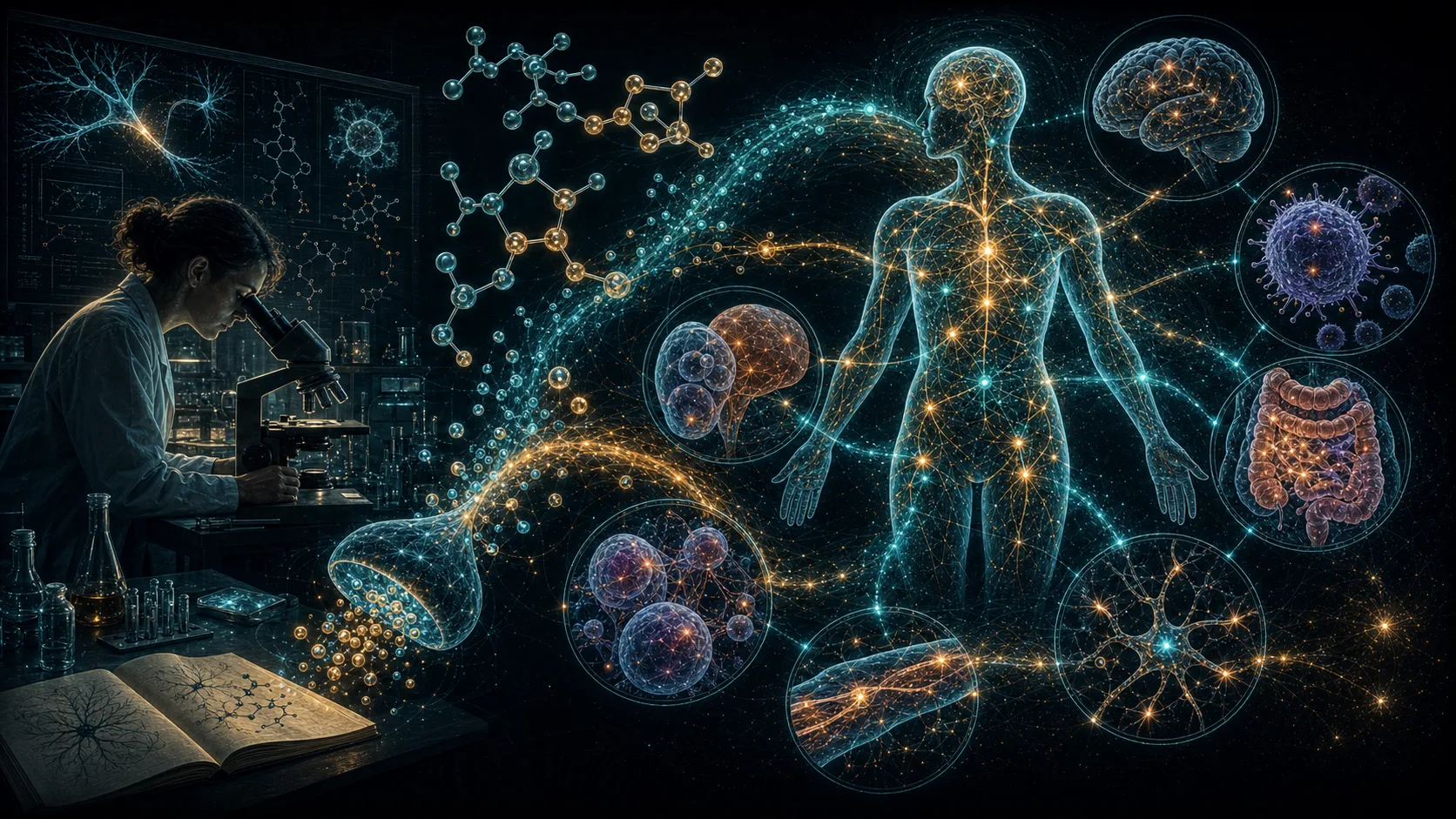
- Receptor network
- Body-wide signal
- Homeostatic balance
- Plant chemistry
Lesson 3.1.1 The Most Important System You Were Never Taught About
Start here In 1992, scientists identified the first endocannabinoid — anandamide. This discovery revealed something extraordinary: your body produces its own cannabis-like compounds. And they regulate everything.
The endocannabinoid system (ECS) was named after the plant that led to its discovery — cannabis — because THC's effects on the brain pointed researchers toward looking for the natural receptors that THC was binding to. They found receptors. Then they found the body's own molecules that fit those receptors. Then they found that this system was one of the most ancient, most pervasive, and most important regulatory systems in vertebrate biology.
As Dr. Bob Melamede explains: "The endocannabinoid system regulates everything in your body. Your immune system, digestive system, cardiovascular system, reproductive system, nervous system, musculoskeletal system, skin, bones — everything in your body is regulated from conception until death by the endocannabinoids you make."
Not some things. Everything. From the moment of fertilization to the last breath of death, the ECS is there, regulating, balancing, adapting.
Lesson 3.1.2 The Three Components of the ECS
The endocannabinoid system has three main components:
1. Endocannabinoids — the signaling molecules your body produces:
Start here Anandamide (AEA) — from Sanskrit "ananda" meaning bliss. Activates CB1 receptors primarily. Involved in mood, memory, pain, appetite. "The runner's high" is largely anandamide. Short-lived — quickly broken down by FAAH (fatty acid amide hydrolase).
2-AG (2-Arachidonoylglycerol) — the most abundant endocannabinoid. Full agonist at both CB1 and CB2. Major role in immune function, pain, neuroprotection.
Both are made on demand from membrane lipids — specifically from the polyunsaturated fatty acids in your cell membranes. This is why dietary fat (the right kinds) is not optional — it is the raw material for your endocannabinoid system.
Lesson 3.1.3 Retrograde Transmission: the Feedback Loop
Start here One of the most extraordinary features of the endocannabinoid system is its mechanism of action: retrograde transmission. Unlike most neurotransmitters, which travel forward from the sending neuron (pre-synaptic) to the receiving neuron (post-synaptic), endocannabinoids travel backwards.
Core lineThis is your brain's built-in volume control. When a neuron is overactive — producing too many free radicals, risking damage — it sends a retrograde signal via endocannabinoids to turn the signal down.
Core lineThis is homeostasis in action. This is the ECS doing its job: preventing the nuclear reactor from melting down.
Lesson 3.1.4 The ECS Through History
Start here The endocannabinoid system is not a recent evolutionary addition. It first appeared with the vertebrates — approximately 600 million years ago. The CB1 receptor evolved first, enabling the more complex brain organization that characterizes vertebrates. The CB2 receptor evolved later, providing the immune-modulatory capabilities that enabled even greater complexity.
Vertebrates — fish, amphibians, reptiles, birds, mammals — show an evolutionary trajectory of increasing adaptability, increasing brain complexity, increasing capacity to learn and change behavior. And throughout this trajectory, the density of cannabinoid receptors in the most evolutionarily advanced brain regions continuously increases.
As Dr. Bob puts it: "We make iPhones because of the endocannabinoid system. Ants don't make iPhones."
The ECS is the biological substrate of adaptability. The system that enables learning, flexibility, relearning — the capacity to do what an FLP does naturally and a BLP cannot.
CB1 and CB2 — the Yin and Yang of Metabolism
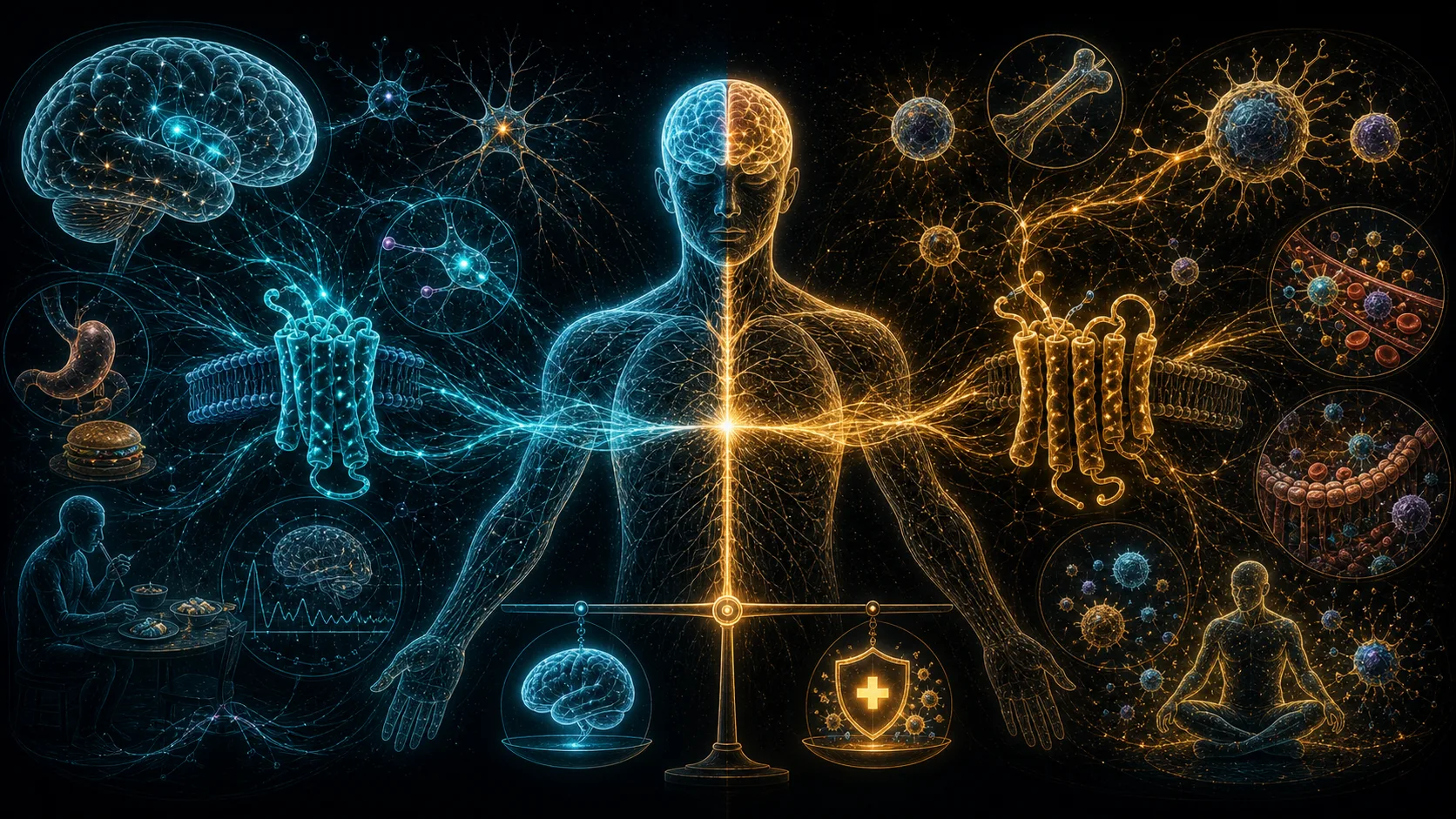
- Receptor network
- Body-wide signal
- Homeostatic balance
- Plant chemistry
Lesson 3.2.1 The Master Seesaw
Start here Dr. Bob's most powerful conceptual contribution to understanding the ECS is framing CB1 and CB2 as a seesaw or yin-yang: two opposing, complementary, mutually regulating systems. When one goes up, the other comes down. Balance between them is health; imbalance in either direction is disease.
You need both. The goal is not to shut down CB1 (that would kill you — recall the CB1 knockout mice dying prematurely). The goal is to maintain the right balance — enough CB1 to power differentiated function, enough CB2 to keep up with repair and prevent inflammatory runaway.
Lesson 3.2.2 The CB1 Knockout Mouse Experiments
Start here One of the most compelling pieces of evidence for the centrality of the ECS to health and longevity comes from studies of CB1 knockout mice — mice genetically engineered to lack the CB1 receptor.
They cannot relearn. When placed in a water maze and taught to find a hidden platform, they learn normally. But when the platform is moved, they keep swimming to the old location. They cannot update their mental model. They are stuck.
This last finding is the origin of Dr. Bob's FLP/BLP distinction. These mice are CB1-deficient — and they are incapable of the very thing that defines FLPs: updating their model of reality in response to new information.
Meanwhile, long-term studies at the NIH — designed to show how dangerous marijuana was — found instead that mice given high doses of THC over their lifetimes lived longer and had fewer tumors than control mice.
Lesson 3.2.3 Cannabis in Mother's Milk
Start here One of Dr. Bob's most provocative — and important — observations: mother's milk contains psychoactive endocannabinoids. Specifically, 2-AG is found in high concentrations in breast milk.
Why? CB1 receptor activation is essential for newborns to suckle. Neonatal mice with CB1 receptors blocked stop nursing and starve. The endocannabinoid in breast milk activates the infant's CB1 receptors, enabling the suckling reflex, providing neuroprotection against the oxidative stress of suddenly breathing oxygen (the infant has just gone from a zero-oxygen environment to 21% oxygen — enormous oxidative stress), and providing the building blocks for brain development.
He also speculates — with tongue partly in cheek but a serious underlying point — that politicians who were not breastfed may suffer from what he calls "post-birth traumatic stress disorder" (PTSD from cannabinoid deprivation in infancy), which might explain their rigidity, fear of change, and general backwards-looking disposition.
Phytocannabinoids — the Plant's Gift
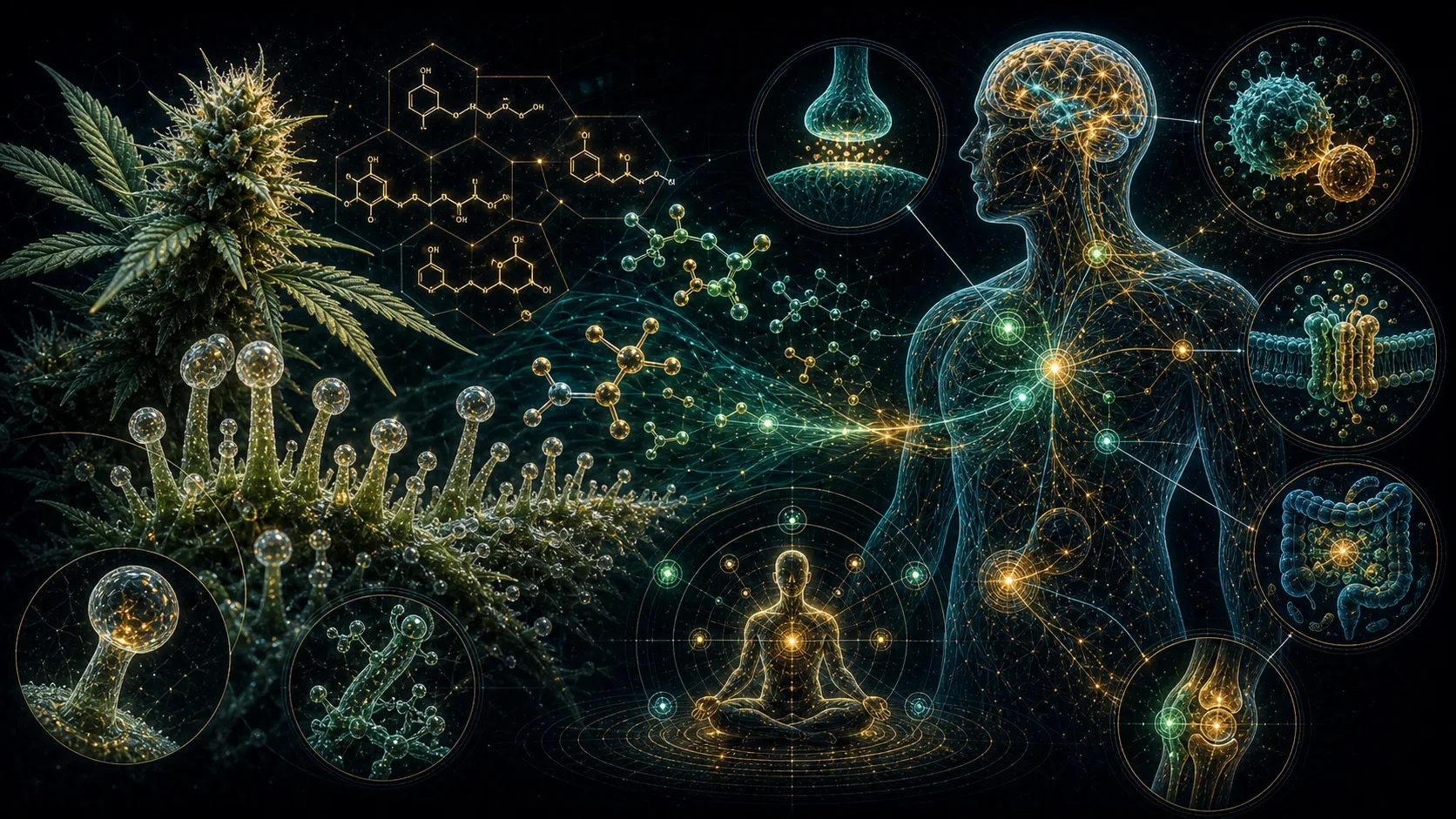
- Receptor network
- Body-wide signal
- Homeostatic balance
- Plant chemistry
Lesson 3.3.1 Why Cannabis Works
Cannabis contains over 100 cannabinoids, the most studied of which are:
Lesson 3.3.2 Cannabis Is an Essential Nutrient
Start here Dr. Bob's most radical claim — and one he supports with deep scientific reasoning: cannabis is not a drug. It is an essential nutrient.
Lesson 3.3.3 The Healing Evidence
Start here Dr. Bob's clinical observations and the scientific literature document cannabis effectiveness across a remarkable range of conditions:
Lesson 3.3.4 Citicoline: the Essential Companion
Start here Dr. Bob emphasizes one supplement that everyone using high-dose cannabis should know about: citicoline (CDP-choline).
High doses of cannabis decrease acetylcholine levels in the brain. When acetylcholine drops too low, you get the dysphoric effects of cannabis overdose — anxiety, racing heart, feeling like you're dying. This is why some people have bad experiences with cannabis.
Citicoline raises acetylcholine levels. It eliminates the dysphoric effects of high-dose cannabis while preserving — and even enhancing — the therapeutic benefits. It is available over the counter, inexpensive, and safe.
The ratio Dr. Bob recommends: 5 parts citicoline to 1 part cannabis extract by milligrams.
Module 3 Quiz: The Endocannabinoid System
Use this as a retention check. Nothing is saved, scored, or required to keep reading.